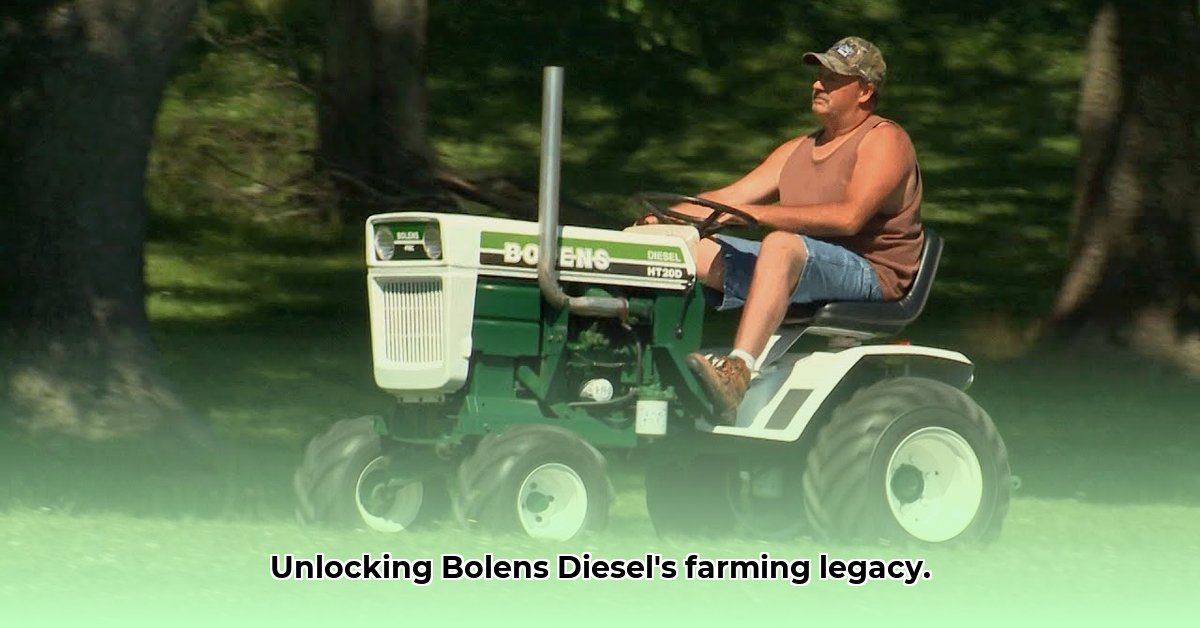
Bolens Diesel Tractors: A Legacy of Farm Efficiency and Sustainability
The Bolens diesel tractor holds a unique position in agricultural history. These Wisconsin-built machines didn't merely alter farming operations; they reshaped the agricultural landscape. Imagine the backbreaking labor, endless hours in the fields, and low yields of pre-mechanization farming. Bolens tractors revolutionized this reality. Their evolution, from simpler early models to powerful workhorses, represents a significant advancement in farm efficiency. How did this impact sustainable farming practices? Let's explore. For more tractor history, see this great resource: Tractor History.
The Bolens Story: From Humble Beginnings to Farming Powerhouse
Bolens' history is one of continuous refinement. Each model introduced improvements—more potent engines, smoother transmissions, and versatile attachments simplifying farming. These upgrades weren't solely about convenience; they impacted the broader agricultural ecosystem.
Consider the immense physical demands of pre-mechanized farming. Bolens tractors dramatically lessened this burden, enabling farmers to work longer and achieve more. This wasn't just about convenience; it was about human well-being, reducing injuries and exhaustion. While the term "sustainability" wasn't widely used then, the indirect impact of Bolens tractors on sustainable farming is undeniable. By boosting productivity, these machines allowed for smarter, not harder, work.
More Output, Less Input: The Unexpected Sustainability of Bolens Tractors
Bolens diesel tractor advancements weren't only horsepower increases; they involved resource-efficient design. More efficient engines likely meant reduced fuel consumption per unit of work. Although precise fuel efficiency data for older models is scarce, the positive effects are evident.
This efficiency had ripple effects. Higher yields potentially meant less land needed for equivalent crop production, lessening pressure on natural resources and preserving farmland. Diminished land usage translates directly to reduced environmental impact. Isn't it fascinating how seemingly simple improvements can lead to such significant long-term benefits?
However, assessing the overall environmental footprint of Bolens tractors is complex. We lack comprehensive data on emissions, fuel consumption, and manufacturing methods for a complete picture.
Unanswered Questions and Ongoing Research
A major challenge in studying equipment like Bolens tractors is the scarcity of detailed historical data. Researchers are actively working to locate and analyze old records and specifications to better understand these machines' environmental impact. We're only beginning to piece together the full picture. Key data gaps include:
- Fuel Consumption Rates: Precise data across models and operating conditions is crucial.
- Emission Levels: Determining historical emissions is vital for understanding air quality impact.
- Manufacturing Processes: Understanding the materials and environmental impact of manufacturing is essential.
- Lifecycle Analysis: A full lifecycle assessment, from manufacturing to disposal, is needed for a complete understanding.
Looking Ahead: A Sustainable Future Informed by the Past
Despite data limitations, the Bolens tractor story offers valuable lessons about efficient agricultural practices and resource management. What actionable steps can be taken?
Key Takeaways:
- Bolens tractors' impact on farming efficiency is undeniable.
- Precise data on their environmental impact remains limited.
- Research into historical fuel consumption and emissions is crucial.
Actionable Insights:
- Farmers/Landowners: Evaluate fuel efficiency in older tractors. Explore alternative fuel options (e.g., biodiesel). Invest in precision agriculture techniques to reduce resource use.
- Manufacturers/Repairers: Improve parts accessibility and repair manuals. Develop sustainable attachment designs. Invest in research into sustainable materials and manufacturing processes.
- Researchers/Historians: Collect and analyze data on fuel consumption, emissions, and materials. Conduct full lifecycle assessments.
The Enduring Legacy
The Bolens diesel tractor's legacy is multifaceted. While comprehensive environmental impact data is still emerging, their contribution to farm efficiency is undeniable. They represent a pivotal point in agricultural history, a transition shaping our present. By understanding their impact – both positive and negative – we can better guide the future of sustainable farming practices. The research continues, and the lessons from the past inform a more sustainable future.